
I Was Deepfaked by a Classmate
The AI epidemic no-one wants to talk about:

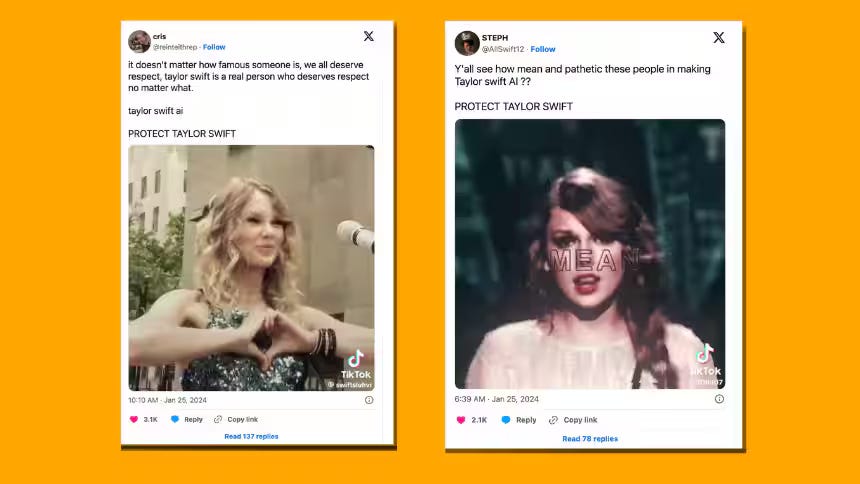
In January 2024, sexually explicit AI-generated images of Taylor Swift flooded X. One post racked up 47 million views before removal. Her fans mobilised under #ProtectTaylorSwift, the White House called it “alarming,” and within weeks a bipartisan bill hit Congress. Microsoft’s CEO weighed in. Legislation moved.
Taylor Swift had an army of millions, the ear of world leaders, and the cultural weight to turn a deepfake scandal into a front-page policy debate. She had every resource imaginable.
I had a police officer who told me to keep quiet so the boy who did it wouldn’t delete the evidence.
That is the difference and it is the reason I believe this problem has grown so fast.
Deepfake abuse is not just a political, criminal or technology problem but a branding problem because the products that enable it are packaged to look harmless, useful and modern. For some of them, the language is soft, interfaces are polished and the harm is pushed just far enough out of sight that people pretend they are looking at software, not exploitation.
That is how abuse became scalable.
The Branding That Made Exploitation Look Like a Product
Grok AI's ability to generate nude images of women and children made headlines, but the infrastructure was already thriving. The reason most people didn't know is the same reason most harmful products succeed: the branding was clean, the language was soft, and nobody wanted to look too closely at what was actually being sold.
Undress.app serves over 100,000 daily users and describes its interface as "refreshingly simple" and "modern." ClothOff runs as a Telegram bot — send a photo, receive a nude version in seconds, no download required. CrushAI, built by Hong Kong-based Joy Timeline, ran over 8,000 ads on Facebook and Instagram before Meta sued them for repeatedly bypassing ad moderation.
Thirty-one of them were rated suitable for children in the Apple and Google app stores. They passed review because they looked like legitimate products.
OKbra, the site used to create images of my friends and me, operates the same way. These aren’t back-alley operations.
The industry calls what it does “nudification” and “undressing” , language so clinical it slips through automated moderation. Links advertising these apps increased 2,400% on social media since 2023. Meta had to build entirely new detection technology to catch their ads “even when the ads themselves don’t include nudity,” because the marketing language was clean enough to pass every filter.
This is how harmful products win: they borrow the grammar of convenience.
The Language That Protects Predators
The same pattern appears in the media.
The media uses terms like “underage woman” when reporting on deepfake abuse and sexual assault. Stop and think about what that phrase does. “Girl” or “child” triggers protection. “Woman” implies agency, consent, adulthood — even when the article acknowledges the person is under 18.
This isn’t hypothetical. In 2019, NPR’s Morning Edition host Steve Inskeep described Jeffrey Epstein’s victims as “underage women” on air. Listeners flooded in with complaints. NPR’s standards editor sent a memo to the entire newsroom: when victims are under 18, the correct words are “girls,” “boys,” and “minors.” The segment was re-recorded.
Then, in December 2025, NPR used the exact same phrase again. Six years later, same mistake.
It goes further. Media outlets used the term “child prostitute” or variations over 5,000 times in a five-year period.
The same pattern appears in how headlines are structured. “Woman targeted by deepfake”, passive voice, no perpetrator, she’s the focus. “Man creates sexual images of woman without her consent”, names the action and the person responsible. The first protects the perpetrator. The second protects the victim. Most outlets default to the first.
When we describe abuse vaguely, we protect the person doing it under the illusion that we are protecting the person it happened to.
What It Actually Does to You
I was a victim of OKbra in 2024, before any of this became illegal on 6 February 2026. The police told us nothing could be done and nothing happened to the male classmate responsible.
It ruined a lovely photo, my girlfriends and me celebrating the end of our exams. But what it left behind was worse: the terror that this image would resurface later in my life and I’d be met with the same response I got then. Silence.
The issue isn’t whether it looks real. To anyone who knows us, our bodies are drastically different; our AI-generated breasts are all the same size. But that doesn’t settle the questions that actually matter. Would my employer know it was fake? Would my grandparents? Would someone who’d never heard of these websites?
Probably not and that was terrifying.
No Consequences, No Accountability
Although my first feeling was humiliation, it evolved into frustration that I was the one carrying it, not the person who did it.
One in three women has experienced online abuse. In September 2023 alone, 24 million people visited “undressing” sites, generating millions in revenue. Grok AI produced around 3 million sexualised images in under two weeks, including 23,000 of minors.
This is a lucrative global business model built on abuse.
The biggest takeaway from my experience with the police was how much protection was given to the person who did this. The priority was preserving his reputation. Ours was permanently threatened by an image we never consented to.
We were told he’d be contacted at home to “scare him” out of doing it again. I don’t believe this happened. We were never contacted again by the officer, despite following up.
I don’t think my peer should have been sent to prison for life. He was uneducated in respect and consent but he was also our age, and if we knew it was wrong, he was perfectly capable of knowing too. Perpetrators need to be educated on why this is sexual assault. Actions need consequences.
Both are necessary.
The Revenge Porn Helpline recorded a 400% increase in non-consensual AI-generated intimate image cases between 2017 and 2024. The Internet Watch Foundation’s reports more than doubled in a single year and for years, not a single person was meaningfully prosecuted. The first conviction under the US TAKE IT DOWN Act came in April 2026, an Ohio man who pleaded guilty to multiple cybercrimes including publishing digital forgeries.
What Governments Should Actually Do
Banning sites and tools alone will not work. Criminalising them without broader reform just pushes the industry underground.
Government action has to go much further. It must include education, policing, and accountability.
Education about consent, respect, pornography, and digital ethics should begin in adolescence. Schools need to teach students not only how to spot fake content, but why creating it is abuse. Policymakers must also fund training for police and teachers so they can recognise digital sexual abuse and respond with competence instead of dismissal.
The average officer or teacher currently lacks the technical and emotional literacy to intervene effectively. That gap leaves victims trapped between humiliation and inaction.
We contacted the MET Police for comment but they did not get back to us.
Ava Powell is a guest contributor for Anca Point, a branding and communications firm for companies and leaders who do serious work but need help articulating it in a way that builds credibility and influence.
We work with venture capital firms, tech companies, media businesses and ambitious brands across sectors. What they have in common: expertise worth sharing but no strategy to do it properly.
Our lead strategist spent years in journalism, interviewing high-growth founders, investors and industry leaders.
She quickly realised that even the most promising businesses struggled to articulate their value. Without a clear strategy, their marketing was inconsistent, their market positioning diluted and this undermined everything from attracting top talent and engaging investors to driving growth and strengthening brand reputation.
At Anca Point, we’ve studied how attention and credibility actually work. We use your expertise to build brands and create content that positions you as the go-to leader in your industry.